Introduction
In today’s fast-paced digital landscape, businesses face increasing pressure to stand out online. Off-the-shelf software and generic web templates often fall short when it comes to meeting unique operational needs and delivering exceptional user experiences. This is where custom web development becomes a critical investment.
This article explores why custom web development is essential for business growth, how it addresses common challenges, and practical strategies for successful implementation. By the end, you will understand how tailored web solutions can improve scalability, enhance user engagement, and provide a competitive edge.
What is Custom Web Development?
Custom web development refers to building websites or web applications that are specifically designed and coded to meet the unique requirements of a business. Unlike pre-built platforms, custom solutions are crafted from scratch or heavily modified to align with specific workflows, branding, and functionality.
Benefits of Custom Web Development
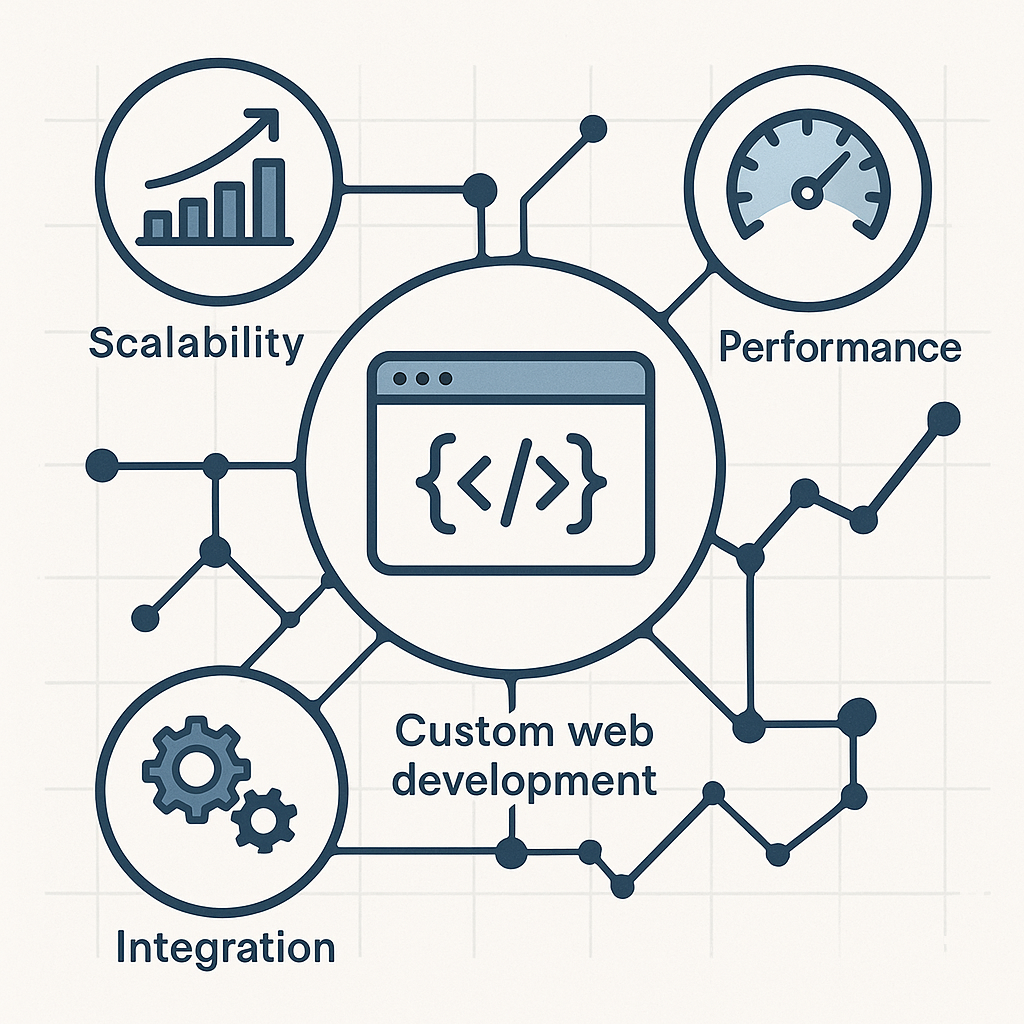
- Scalability: Tailored architecture allows your solution to grow with your business needs.
- Performance Optimisation: Code and infrastructure are optimised for your specific use cases.
- Unique User Experience: Custom UI/UX design enhances engagement and brand identity.
- Integration Flexibility: Seamlessly connect with third-party APIs and internal systems.
- Improved Security: Security protocols can be adapted to your compliance requirements.
Common Business Challenges Solved by Custom Web Development
Businesses often struggle with limitations imposed by standard platforms, including:
- Lack of Flexibility: Off-the-shelf solutions may not support specialised features.
- Poor User Experience: Generic templates often fail to engage target audiences effectively.
- Integration Issues: Difficulty connecting disparate systems or APIs.
- Scalability Constraints: Inability to handle growing user bases or data volumes.
Custom web development addresses these by providing bespoke solutions tailored to exact needs.
Best Practices for Successful Custom Web Development
1. Define Clear Business Objectives
Start with a detailed understanding of the business goals and user requirements. This foundation guides design, feature prioritisation, and technology choices.
2. Choose the Right Technology Stack
Select technologies that offer scalability, maintainability, and performance. Popular modern stacks include:
- Frontend: React.js, Next.js, TypeScript
- Backend: Node.js, Prisma
- Styling: TailwindCSS
3. Prioritise User-Centred Design
Invest in UI/UX design that reflects your brand and simplifies user journeys. Accessibility should be a key consideration.
4. Build Scalable Architecture
Plan for future growth by designing modular and extensible systems.
5. Implement Robust Testing and QA
Continuous testing ensures reliability and performance across devices and browsers.
6. Plan for Ongoing Maintenance
Custom solutions require regular updates and support to remain secure and effective.
Step-by-Step Guide to Custom Web Development
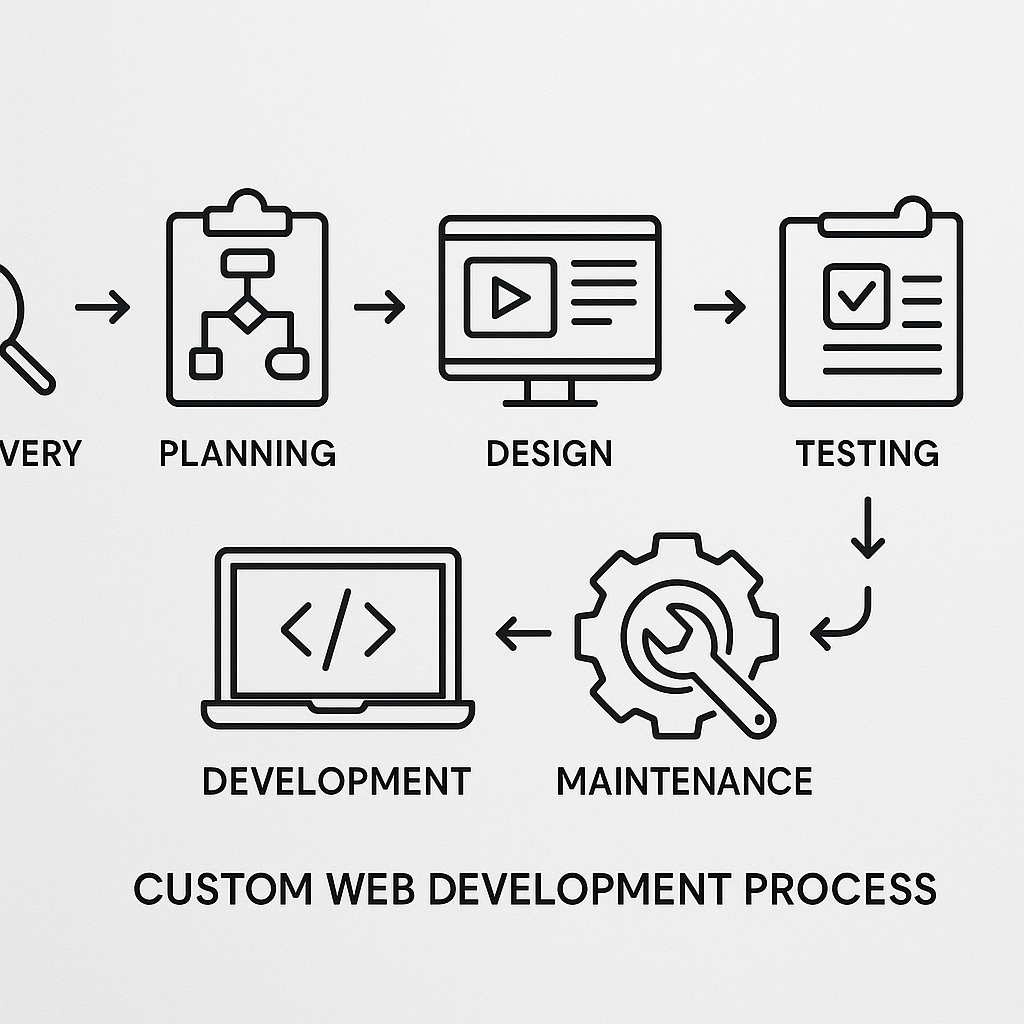
- Discovery & Research: Analyse business needs, competitors, and user personas.
- Requirement Specification: Document features, workflows, and technical requirements.
- Design Phase: Create wireframes, prototypes, and UI designs.
- Development: Build frontend and backend components using chosen technologies.
- Testing: Conduct functional, performance, and security testing.
- Deployment: Launch the application on a reliable hosting environment.
- Maintenance & Iteration: Monitor performance and iterate based on user feedback.
Practical Examples of Custom Web Development Impact
- A sustainable e-commerce start-up implemented a custom platform integrating AI-powered product recommendations, increasing conversion rates.
- An accessibility-focused organisation developed a web portal with tailored features ensuring compliance and enhanced usability for users with disabilities.
Common Mistakes to Avoid
- Skipping Discovery Phase: Leads to unclear objectives and scope creep.
- Overcomplicating Features: Focus on essential functionality to avoid delays.
- Ignoring Scalability: Can cause costly rework as business grows.
- Neglecting Security: Custom code must be audited regularly.
Technical and Business Considerations
- Budget & Timeline: Custom development can require significant investment and realistic scheduling.
- Team Expertise: Ensure developers have experience with your chosen stack and industry.
- Compliance: Consider GDPR, accessibility laws, and industry-specific regulations.
- Integration Needs: Map out third-party services and APIs early.
How Radium Agency Supports Custom Web Development
Radium Agency specialises in full-stack web development using React.js, Next.js, and TypeScript, focusing on scalable, user-centred digital products. Their expertise includes AI integration, e-commerce platforms, and accessibility solutions tailored to client needs.
Partnering with an agency like Radium ensures access to experienced developers who can deliver maintainable, high-performance applications aligned with your business strategy.
FAQ
Q1: How long does custom web development typically take?
A: Project duration varies based on complexity, but a typical custom web app can take several months from discovery to deployment.
Q2: Is custom development more expensive than using off-the-shelf solutions?
A: Initial costs are higher, but custom solutions offer better ROI through scalability, performance, and tailored features.
Q3: Can custom web applications integrate with existing systems?
A: Yes, custom development allows seamless integration with APIs, databases, and third-party services.
Q4: How do I ensure my custom web app is secure?
A: Use secure coding practices, conduct regular audits, and keep dependencies updated.
Q5: What role does user experience play in custom web development?
A: UX design is critical to engagement and adoption; custom development allows you to tailor interfaces precisely.
Q6: Can AI features be integrated into custom web applications?
A: Absolutely. AI integration can enhance personalisation, automation, and data analysis.
Q7: How do I choose the right technology stack?
A: Consider project requirements, team expertise, and future scalability when selecting technologies.
Q8: What maintenance is required after launch?
A: Ongoing monitoring, security updates, performance tuning, and feature enhancements are essential.
Conclusion
Custom web development is a strategic investment that enables businesses to build scalable, secure, and user-friendly digital products tailored to their unique needs. By following best practices and partnering with experienced developers, companies can overcome the limitations of generic platforms and achieve lasting growth.
If you are considering a custom web solution, Radium Agency offers expert full-stack development and AI integration services designed to align technology with your business goals. Reach out to explore how tailored web applications can drive your success.